🦎 Our necks may not have evolved for looking around after all
New research suggests the first animals to crawl onto land had stiff necks, so the neck may have appeared for walking, not for turning the head.
The mystery
Fish can't really turn their heads — their skull is joined to the shoulders. Scientists long assumed the neck evolved so early land animals could look around. A new study says that tidy story might be wrong.
The answer
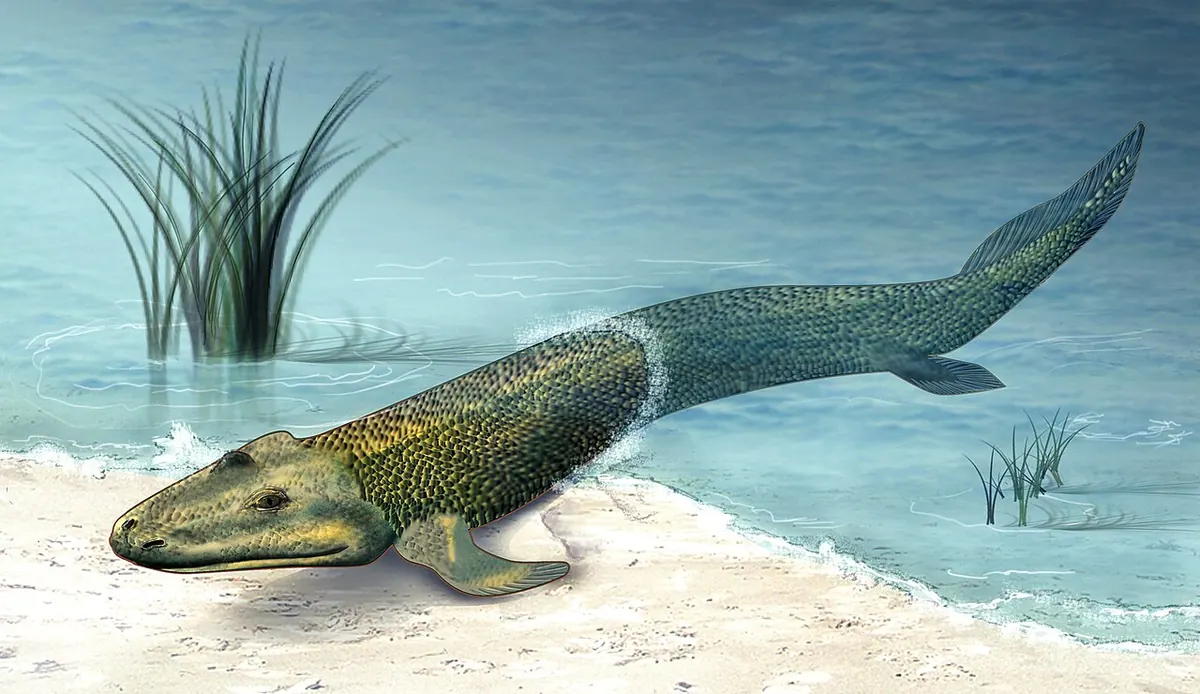
About 380 million years ago, fish-like creatures began moving from water onto land, and some developed a gap between the skull and shoulders — the first necks. The classic idea was that this let them scan for prey and danger without turning their whole body. An international team tested that by combining new fossil evidence, lab tests on present-day fish and digital reconstructions of ancient skeletons, publishing in Nature on October 14. They concluded these early necks were surprisingly stiff and could barely turn. Instead, the neck may have formed as a side effect of reshaping the skeleton so the front limbs could help with movement. Penn State biologist Tom Stewart noted that many skeletal changes from that period still shape human bodies today. Fossils such as Tiktaalik, found in Arctic Canada and described in 2006, were key clues.
Now think about this
Which other body part do you think might have evolved for a reason completely different from what it does today?